Specialist Palm Tree Trimming & Maintenance Across the UAE
Certified arboricultural trimming, seasonal canopy hygiene, dead frond pruning, fruit stalk thinning, and structural health assessments for Date, Washingtonia, Wax, and Coconut palm specimens across Dubai, Abu Dhabi, and all Emirates.
Arboricultural Physics: Pruning Geometry & Vascular Crown Protection
Palm tree pruning requires a completely different approach than standard dicot tree canopy reduction. Severe over-pruning—often referred to as "hurricane cutting" or "rooster tailing"—removes living, photosynthetically active green fronds, depriving the apical meristem of carbohydrates and inducing permanent stipe narrowing ("pencil-pointing"). In the extreme climate of the UAE, excessive canopy loss also exposes the sensitive growing bud to severe solar radiation and thermal shock. Palm Works UAE follows strict ISA horticultural guidelines: we prune strictly below the horizontal 9-to-3 o'clock axis, removing only dead, necrotic, or structurally hazardous fronds, excised flush without injuring the petiole collar or damaging adjacent stipe tissue.
The 4-Stage Arboricultural Maintenance Cycle
Structured crown care delivered by certified technicians to maximize palm longevity, health, and landscape safety.
Canopy Health Inspection
Evaluation of terminal spear health, crown symmetry, frond nutrient deficiencies (potassium/magnesium chlorosis), and fungal symptoms.
Sanitary Frond Excision
Excision of dead, brown, or drooping fronds below the horizontal plane using disinfected cutting tools to eliminate fire hazards and pests.
Inflorescence & Fruit Thinning
Seasonal removal of heavy date fruit clusters or spent flowering stalks to redirect metabolic energy back into stipe and root vitality.
Pest & Pathogen Screening
Detailed stipe and crown screening for early indicators of Red Palm Weevil (*Rhynchophorus ferrugineus*) and fungal bud decay.
Disinfected Equipment & High-Reach Boom Lifts
Pathogens such as *Fusarium oxysporum* and *Thielaviopsis* are frequently transmitted between palm trees by contaminated pruning tools.
- Sterilization Protocol: Saws and shears are chemically disinfected between every tree to stop pathogen transmission.
- No Climbing Spikes: Our arborists access crowns using hydraulic boom lifts (cherry pickers) or rope friction saddles—never tree climbing spikes that puncture the stipe.
- Petiole Collar Preservation: Cuts are made outside the base to protect the apical heart from moisture rot.
- Clean Waste Chipping: Dense fibrous fronds are mulched on-site or transported in enclosed skips to municipal compost facilities.
Annual & Semi-Annual Palm Maintenance Programs
In the UAE's high-temperature environment, palm trees undergo intense growth spurts followed by heavy transpiration demand. Scheduled maintenance ensures crowns remain structurally balanced and free from fire-hazardous dead dry fronds.
Palm Works UAE provides recurring residential and commercial maintenance contracts, aligning trimming windows with regional seasonal shifts to protect newly developing foliage from extreme summer heat spikes.
- Semi-annual visits scheduled in autumn (Oct–Nov) and spring (Feb–Mar).
- Automated irrigation auditing to calibrate root-zone moisture sensors.
- Comprehensive site reports outlining nutrient status and physical stability.
Pruning Guidelines by Confirmed Palm Species
Different palm varieties possess distinct crown geometries, frond lifespans, and fruit-bearing habits across the UAE.
| Palm Species | Ideal Pruning Window (UAE) | Pruning Geometry Standard | Specialized Maintenance Requirement |
|---|---|---|---|
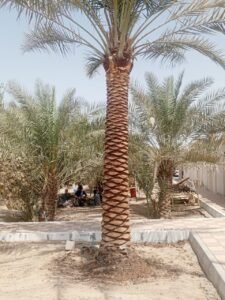
| Date Palm (*Phoenix dactylifera*) | Oct – Nov & Jan – Feb | Retain full horizontal canopy (9-to-3 axis) | Fruit cluster thinning, offshoot excision, spine removal on petioles |
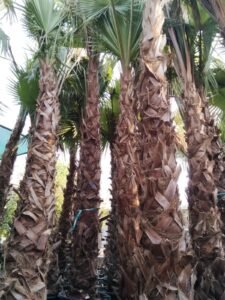
| Washingtonia Palm (*W. robusta / filifera*) | Oct – Apr (Avoid peak summer) | Remove lower drooping skirt fronds only | High-reach lift required (10 m–20 m); skirt removal for fire prevention |
| Wax Palm (*Copernicia / Ceroxylon group*) | Nov – Feb (Cooler months) | Strict conservative pruning; dead fronds only | Delicate terminal bud; high sensitivity to excessive crown thinning |
| Coconut Palm (*Cocos nucifera*) | Mar – Apr & Sep – Oct | Light pruning; retain maximum leaf area | Nut cluster reduction over pathways; micro-nutrient foliar spray |
Practical Factors Governing Palm Maintenance Cost
Maintenance pricing is calculated per tree or per estate based on stipe height, equipment accessibility, and disposal requirements.
| Cost Factor | Standard Maintenance Scenario | Complex Site Challenge | Operational Impact |
|---|---|---|---|
| Palm Stipe Height | Palms under 6 m height accessible via pole saw | Tall Washingtonia or Date palms (10 m to 20 m) | Requires hydraulic cherry picker boom lift deployment and certified harness crews |
| Machinery Site Access | Direct street frontage or paved driveway | Enclosed rear villa courtyard with narrow pedestrian gates | Requires specialized compact spider lift or manual arboricultural rope ascent |
| Tree Count & Frequency | Scheduled multi-tree contract (10+ palms) | Single standalone palm on private residential plot | Mobilization economies of scale reduce individual per-tree unit costs |
| Green Waste Volume | Routine light dead-frond removal | Heavy neglected trees with years of accumulated skirts | Multiple heavy skip truck loads required for municipal green waste disposal |
Frequently Asked Questions: Palm Trimming
Factual guidelines on pruning frequency, crown geometry, and seasonal care in the UAE.
Schedule a Professional Palm Maintenance Survey
Book a site inspection to evaluate canopy health, crown balance, and receive a customized single-visit or annual maintenance proposal.